Every conference stand, investor day and product launch I’ve ever seen work well was decided months before the doors opened, not the week before. It’s one of the clearest patterns from 25 years in B2B marketing, and it’s worth spelling out properly.
The observation
I ran event management as part of a broader marketing role for years, alongside digital media and PR, and the same lesson kept repeating itself regardless of the sector: the outcome of a conference stand, a town hall or an investor day is decided in the planning, long before anyone walks into the room. Bigger budgets and better AV rarely fix an event that was planned in a hurry. What actually matters is how early the right partner gets involved, and how deliberately every decision after that point gets made. That’s true of an internal company event. It’s just as true of the conference stands and investor days I now help life sciences, med-tech and biotech clients across the North East and Scotland plan.

01 – The pattern I’ve spent 25 years watching play out
Bring the specialist in six to nine months before the moment that matters, and they can build something that actually reflects the strategy behind it. Bring them in under time pressure with a brief and a deadline, and they can only execute what’s already been decided, however rushed that decision was. I’ve watched this play out repeatedly across 25 years in B2B marketing for life sciences and manufacturing businesses, preparing for a conference stand, an investor day, or a product launch.
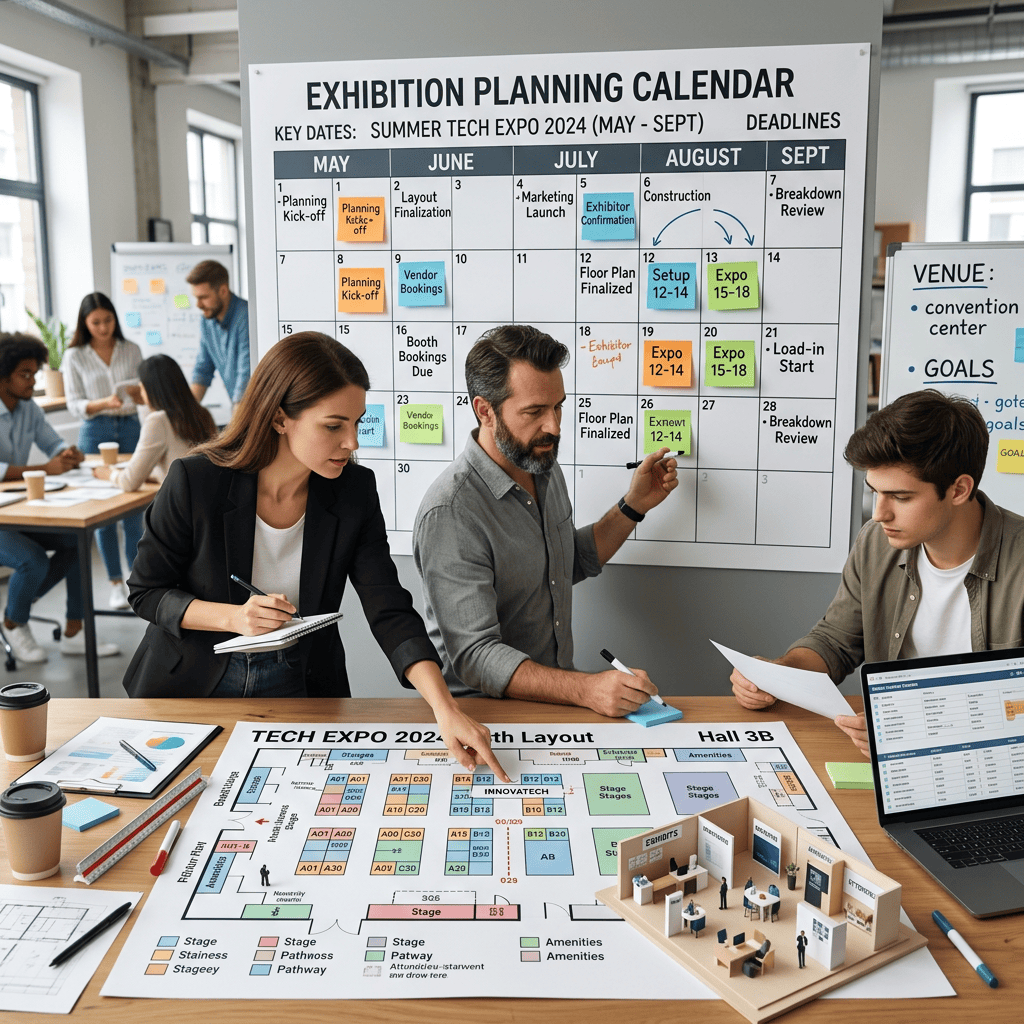
A marketing partner brought in two months before a major exhibition can build a stand that looks the part. They can’t build the months of relationship, content and positioning work that actually converts a conversation on the stand floor into a funded conversation afterwards. I saw this directly running event management as part of a broader marketing role the events that worked were never the ones planned in isolation from everything else the marketing team was doing.
The reframe
A conference stand, an investor day or a launch event is not a single day. It’s the visible tip of months of positioning, relationship-building and content work that either happened, or didn’t, long before anyone walked through the door.
02 – Involving your partner earlier changes what’s possible, not just how it looks
Bringing a partner in earlier isn’t really about production quality. It’s about preventing problems before they’re expensive to fix understanding the venue, the logistics and the audience upfront, rather than discovering a hidden cost or a technical limitation two weeks out. I found this to be true managing event elements alongside digital media and PR: brought in around a genuine milestone rather than the week before a show, you build real understanding of the science, the competitive landscape and the audience and by the time the event arrives, the work is fine-tuning, not invention.

Smarter budgeting follows the same logic. It was never about spending more, it was about spending where it actually had impact. Getting stakeholders to sign off on ideas early, before costly last-minute changes, saved more budget than any single cost-cutting decision ever did. In my experience, the marketing equivalent is agreeing messaging and positioning before a single piece of stand collateral gets designed, so nobody’s redesigning a banner the week of the show because the story changed underneath it.
The events that work aren’t the ones with the biggest budget. They’re the ones where every pound was spent on something that actually moved a conversation forward.
03 – One partner managing the whole picture, not six suppliers to coordinate
The best events I’ve worked on were run by a single team overseeing staging, messaging, content and delivery, rather than a client coordinating separate suppliers for each piece. The value isn’t just convenience it’s that one team with the full picture makes better decisions than several teams each optimising their own piece of it in isolation.
This is the same argument I make to clients for treating brand identity, website and event presence as one connected marketing programme rather than three separate suppliers working from three separate briefs. A conference stand designed by one agency, website copy written by a freelancer, and a pitch deck built in-house rarely tell quite the same story. Owning the whole picture myself from the website a visitor checks before the event to the stand conversation itself removes exactly the kind of inconsistency that a scientifically literate, sceptical audience notices immediately.
04 – Why independence matters when the venue has its own preferred supplier
Venues and conference organisers often push their own in-house or preferred suppliers. It can work, but it limits consistency and advocacy compared with an independent partner whose only job is representing the client’s interests. Conference organisers and cluster bodies operate the same way a preferred stand-design supplier, a recommended agency, a package deal that’s convenient for the venue rather than optimised for the exhibitor.
Working independently, my only job is representing my client’s interests foreseeing problems, managing last-minute changes, and making sure the stand, the messaging and the pre-event outreach are all built around what the company actually needs from the event, not around what’s easiest for the organiser to sell.
05 – What this means for planning your next conference presence
- Bring a marketing partner in at the point of a meaningful milestone a funding round, a readout, a grant award not the weeks before the event itself
- Agree messaging and positioning before a single piece of stand collateral is designed, so nothing needs rebuilding under deadline pressure
- Use one partner across brand, website and event presence rather than coordinating several disconnected suppliers
- Choose an independent partner whose advocacy is for your interests, not the venue’s or organiser’s preferred supplier
- Brief your team as carefully as you’d brief a production partner on who they’re hoping to meet, and why
None of this is specific to corporate AV or to life sciences marketing. It’s a genuinely universal truth I’ve seen hold across manufacturing, software and life sciences alike: the work that shows on the day is a small fraction of the work that made the day worth showing up to.
Planning your next conference stand or investor day?
With over 25 years in B2B marketing across life sciences, biotech and manufacturing, I help North East and Scottish businesses plan event presence properly starting months before the stand goes up, not weeks.
Get in touch


Leave a Reply